Blood in the urine (haematuria): causes, emergencies and tests
Dr. Abdellatif Mitach · 5 min read · Published on
Red or pink urine, even once: blood in the urine must always be investigated. Possible causes, emergency signs and what the work-up involves (ultrasound, CT urogram, cystoscopy).
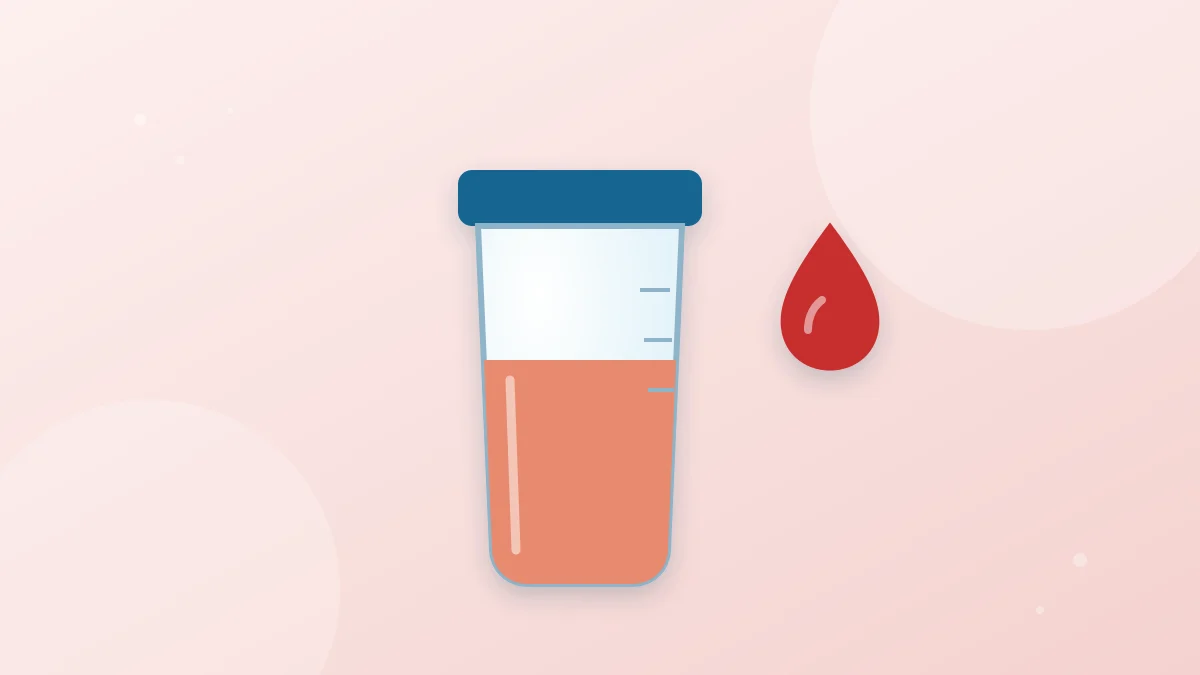
Seeing your urine turn red or pink is always alarming. Sometimes the bleeding stops within hours and it is tempting to forget about it. That is a mistake: blood in the urine, or haematuria, must always be investigated.
In most cases, the cause is benign and easy to treat. But haematuria is also the first sign of some diseases that are best found early, such as bladder tumours.
What is haematuria?
Haematuria means blood in the urine. There are two kinds:
- visible haematuria, seen with the naked eye: urine is pink, red, or dark like tea or cola, sometimes with clots;
- microscopic haematuria, invisible, found on a urine dipstick or a urine test done for another reason.
The blood can come from anywhere in the urinary tract: kidney, ureter, bladder, prostate or urethra.
What causes blood in the urine?
| Cause | Clues |
|---|---|
| Urinary infection (cystitis, prostatitis) | Burning, frequent urination, sometimes fever |
| Urinary stone | Back or flank pain, renal colic |
| Enlarged prostate | Man over 50, weak stream, getting up at night |
| Bladder tumour | Often painless bleeding, especially in smokers |
| Tumour of the kidney or urinary tract | Often no other symptoms, sometimes flank pain |
| Injury, intense exercise, urinary catheter | Clear context, temporary bleeding |
| Kidney disease | Protein in the urine, high blood pressure; nephrologist's opinion |
To learn more about two common causes, read our articles on kidney stones and benign prostatic hyperplasia.
The bleeding has stopped: do you still need to see a doctor?
Yes. A bladder tumour can bleed on and off: one episode, then several weeks of nothing. So the bleeding stopping does not mean the cause has gone.
How is haematuria investigated?
The urologist starts with questions and a clinical examination, paying attention to when the blood appears during urination, which gives a first clue:
| When the blood appears | Most likely source |
|---|---|
| At the start of urination | Urethra or prostate |
| At the end of urination | Bladder, especially the bladder neck |
| Throughout urination | Kidney, ureter or bladder |
The work-up then includes, depending on the case:
- a urine test (urine culture) to look for infection, sometimes urine cytology;
- a blood test to check kidney function;
- an ultrasound of the kidneys and bladder;
- a CT urogram, a scan of the kidneys and urinary tract;
- a cystoscopy: a thin, flexible camera is passed through the urethra under local anaesthesia to look inside the bladder. The test takes a few minutes.
How is haematuria treated?
Treatment targets the cause: antibiotics for an infection, treatment of a stone, treatment of an enlarged prostate. When a bladder tumour is found, it is usually removed through the natural passages (endoscopic resection) and analysed, which guides the next steps.
In some cases, especially microscopic haematuria, the work-up finds no serious cause, and monitoring may be offered.
Is microscopic haematuria found by chance serious?
Usually not, but it should be confirmed with a second urine test and then assessed. The urologist decides how far to investigate based on age, smoking and other risk factors. Women should have the test outside their period. For infections that keep coming back, read our article on recurrent urinary infections in women.
Blood in the urine is one of the 7 signs that should prompt a visit to a urologist.
Haematuria check-up in Agadir
Dr. Abdellatif Mitach, urologist and andrologist, sees patients at his practice on Avenue Hassan II in Agadir to find the cause of urinary bleeding and arrange the necessary tests. See the urinary infections and disorders page or book an appointment online promptly.
Sources
- French Association of Urology (AFU), patient information: urofrance.org
- European Association of Urology (EAU), Patient Information: patients.uroweb.org
- French National Authority for Health (HAS): has-sante.fr
Need a consultation?
Book online in seconds. Our team will call you to confirm your time slot.
Book an appointmentThe information on this website is for general information only and does not replace a medical consultation.
Read next
 Conseils
Phimosis and circumcision: what you need to know
A foreskin that won't pull back, infections, discomfort during sex… Normal versus pathological phimosis, treatment with cream or surgery, paraphimosis, and circumcision under proper medical conditions.
 Conseils
Varicocele: symptoms, fertility and treatment
A heavy feeling in the scrotum, swollen veins, an abnormal semen analysis… Varicoceles are common and often harmless. How to recognise one, when it should be treated and which techniques exist.
 Conseils
Semen analysis: how to read the results
Volume, concentration, motility, normal forms… How to prepare for a semen analysis, how to read the WHO reference values, what oligo-, astheno- or teratozoospermia mean, and what to do if a result is abnormal.