Skip to content
Dr. Abdellatif MitachUrologist & Andrologist in Agadir

Urinary infections & disorders

Recurrent urinary infections, incontinence, blood in the urine: assessment and treatment for men and women.

Urinary infections & disorders
How does a urinary infection develop?

How does a urinary infection develop?

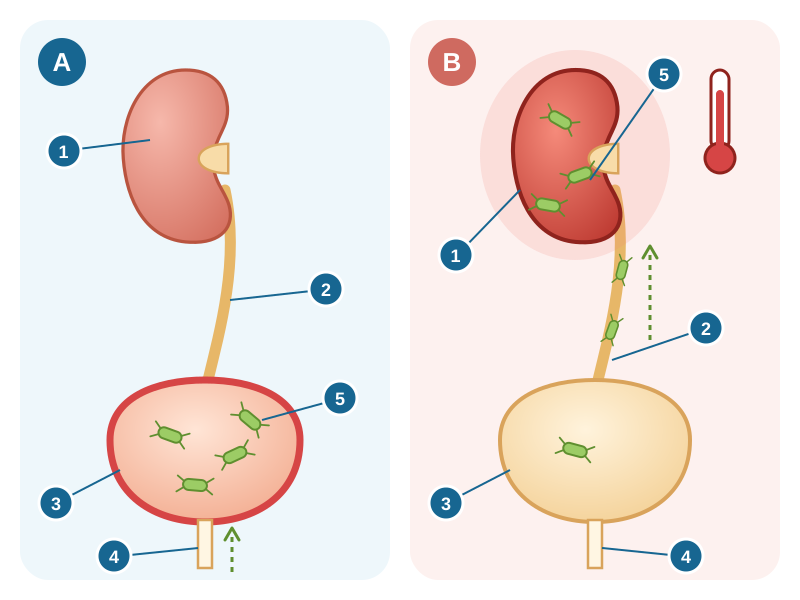
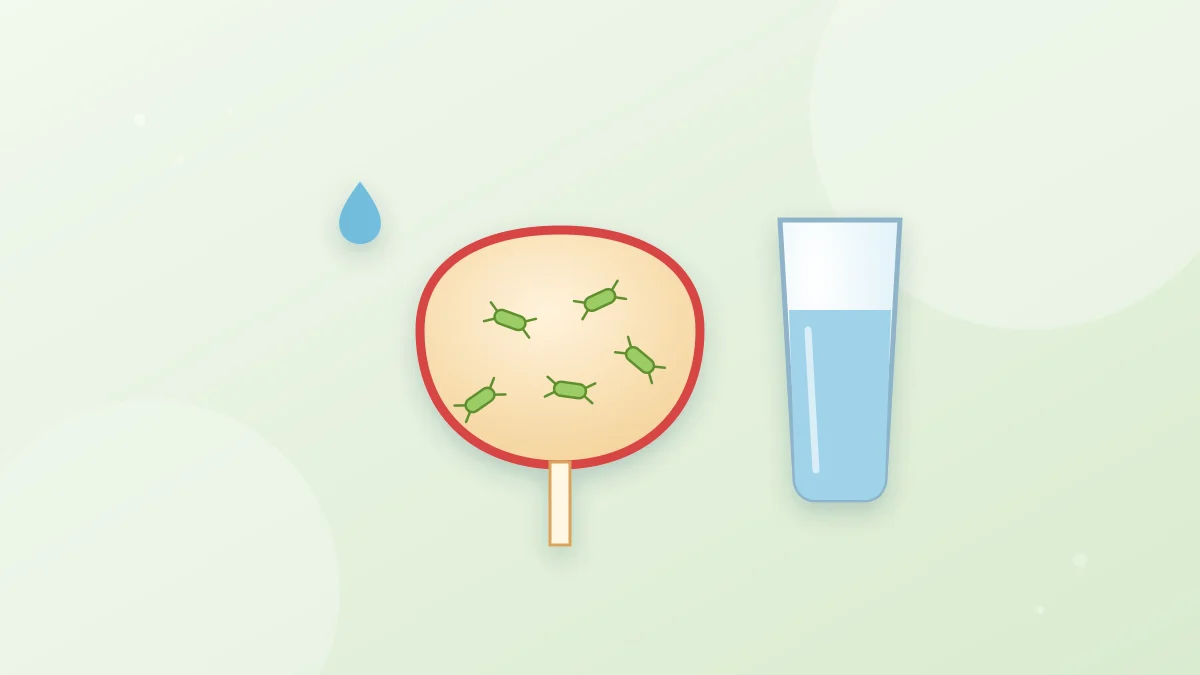
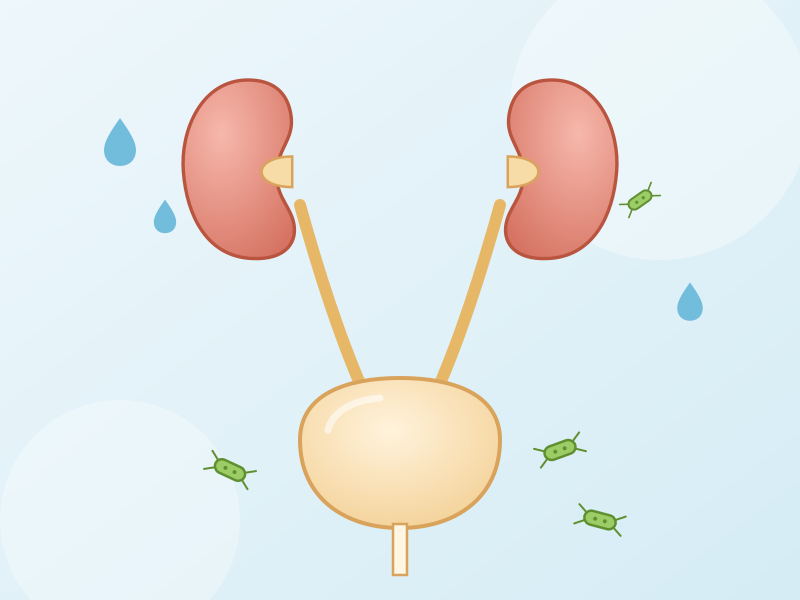
Normally, urine is sterile. Most infections are caused by gut bacteria that travel up the urethra into the bladder: this is cystitis, which causes burning and frequent urination, without fever. In women, the urethra is short, which is why cystitis is more common.

If the bacteria keep climbing through the ureter to the kidney, the infection becomes pyelonephritis: fever, chills and back pain. It must be treated the same day.

In the diagram: A cystitis (bladder infection) · B pyelonephritis (kidney infection, with fever)

1 Kidney · 2 Ureter · 3 Bladder · 4 Urethra · 5 Bacteria
Recurrent urinary infections: should I see a urologist?

After several episodes per year, or for any urinary infection in a man, a urological work-up helps find a contributing cause and tailor prevention.

Is blood in the urine serious?

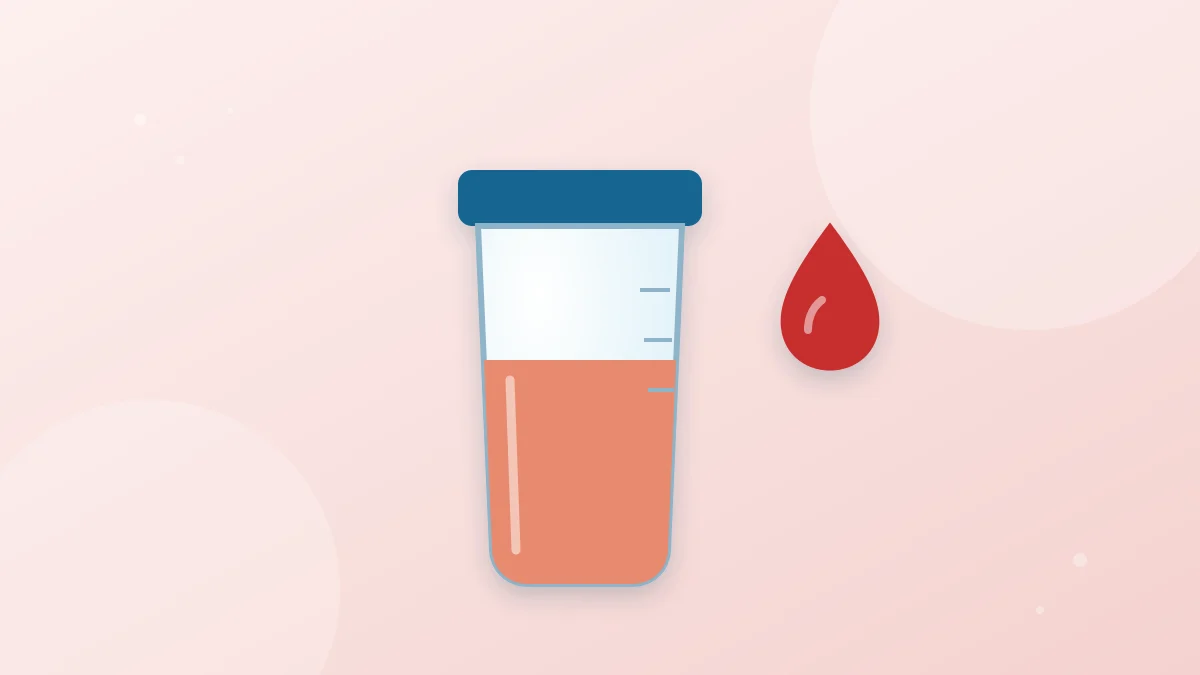
Blood in the urine (haematuria) should always be checked by a doctor, even if it happens once and without pain.

When should you see a doctor?

These signs should prompt a visit to a urologist:

  • Burning when urinating
  • Frequent, urgent need to urinate
  • Cloudy or foul-smelling urine
  • Blood in the urine
  • Fever, chills or back pain: see a doctor quickly
  • Infections that come back several times a year

How is it diagnosed?

  1. Medical history

    Symptoms, how often episodes occur and what may trigger them.

  2. Urine test

    Dipstick and urine culture to identify the germ and choose the right antibiotic.

  3. Ultrasound

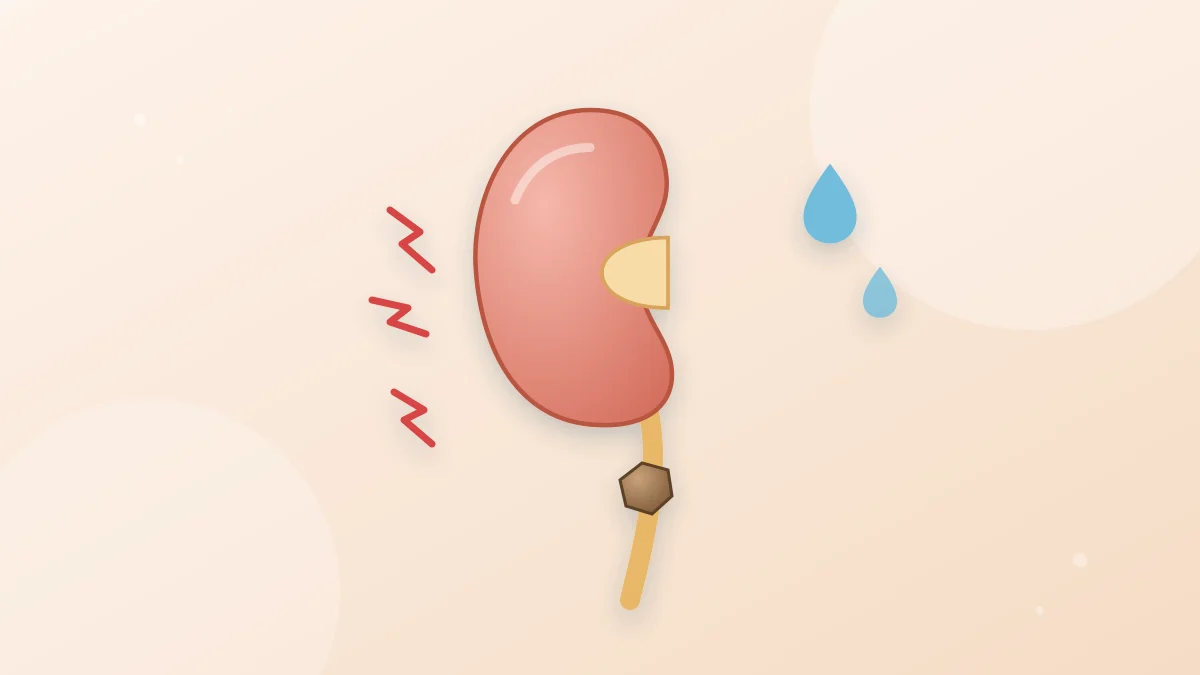
    To look for a stone, a blockage or incomplete bladder emptying, especially in men or with repeat infections.

  4. Further tests

    If needed: uroflowmetry or other tests to find why infections recur.

Treatment options

Treatment is chosen together with you, based on the cause, how severe the symptoms are and what matters to you.

  • The right antibiotic

    Chosen from the urine culture, for a length suited to the type of infection.

  • Treating the cause

    A stone, the prostate or poor bladder emptying: the cause is found and treated.

  • Preventing recurrences

    Lifestyle advice and, in some cases, preventive treatment.

  • Follow-up

    A check-up after an infection with fever, in men or during pregnancy.

Everyday advice

  • Drink 1.5 to 2 litres of water a day
  • Don't hold in urine
  • Urinate after sex
  • Don't take antibiotics without a prescription

Articles to learn more

See all articles

Need a urological opinion?

Book online or message us on WhatsApp.

The information on this website is for general information only and does not replace a medical consultation.

Call WhatsApp