 Conseils
Erection problems: causes, check-up and treatment
Erection problems are common and treatable in most cases. Physical and psychological causes, the link with heart health, what happens at the consultation and the treatments available.
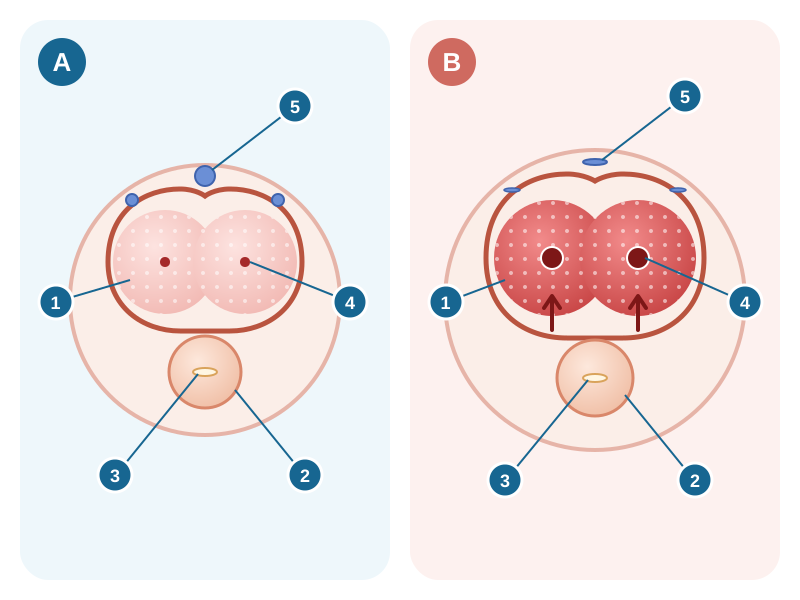
An erection is above all a vascular process. With desire, nerves signal the arteries of the penis to widen. Blood then flows into the two corpora cavernosa, sponge-like tissues that fill with blood. As they swell, they press on the veins and trap the blood: the penis becomes firm.
Anything that damages the arteries (smoking, diabetes, high blood pressure, cholesterol), the nerves or the hormones can disrupt this process. That is why erection problems are closely linked to heart health.
In the diagram (cross-section): A at rest · B during erection
1 Corpus cavernosum · 2 Corpus spongiosum · 3 Urethra · 4 Cavernous artery · 5 Veins
Yes, it affects many men, especially after 40. It can also be an early warning sign of cardiovascular disease, diabetes or hormonal imbalance, so a medical check-up matters.
Effective treatments exist: managing risk factors, oral medication and other options when needed. The choice is made together with the patient, in full confidentiality.
These signs should prompt a visit to a urologist:
The history of the problem, current medication and personal context, in full confidence.
General and genital examination, including blood pressure.
Blood sugar, cholesterol and, if needed, testosterone.
Erection problems can be an early sign of heart and blood-vessel disease, which should be checked.
Treatment is chosen together with you, based on the cause, how severe the symptoms are and what matters to you.
Controlling diabetes and blood pressure, stopping smoking and exercising more are the foundation of treatment.
Tablets help erections; they are prescribed after checking for heart-related contraindications.
An effective option when tablets are not enough.
Psychological or sex therapy, alone or as a couple, when helpful.
ConseilsErection problems are common and treatable in most cases. Physical and psychological causes, the link with heart health, what happens at the consultation and the treatments available.
 Conseils
Volume, concentration, motility, normal forms… How to prepare for a semen analysis, how to read the WHO reference values, what oligo-, astheno- or teratozoospermia mean, and what to do if a result is abnormal.
 Conseils
A foreskin that won't pull back, infections, discomfort during sex… Normal versus pathological phimosis, treatment with cream or surgery, paraphimosis, and circumcision under proper medical conditions.
Benign prostatic hyperplasia, prostatitis and prostate cancer screening: diagnosis and tailored treatment.
Learn moreRenal colic, kidney or ureteral stones: assessment, treatment and prevention of recurrence.
Learn moreMale fertility assessment, semen analysis, varicocele: finding the causes and offering solutions.
Learn moreRecurrent urinary infections, incontinence, blood in the urine: assessment and treatment for men and women.
Learn moreThe information on this website is for general information only and does not replace a medical consultation.