Semen analysis: how to read the results
Dr. Abdellatif Mitach · 5 min read · Published on
Volume, concentration, motility, normal forms… How to prepare for a semen analysis, how to read the WHO reference values, what oligo-, astheno- or teratozoospermia mean, and what to do if a result is abnormal.
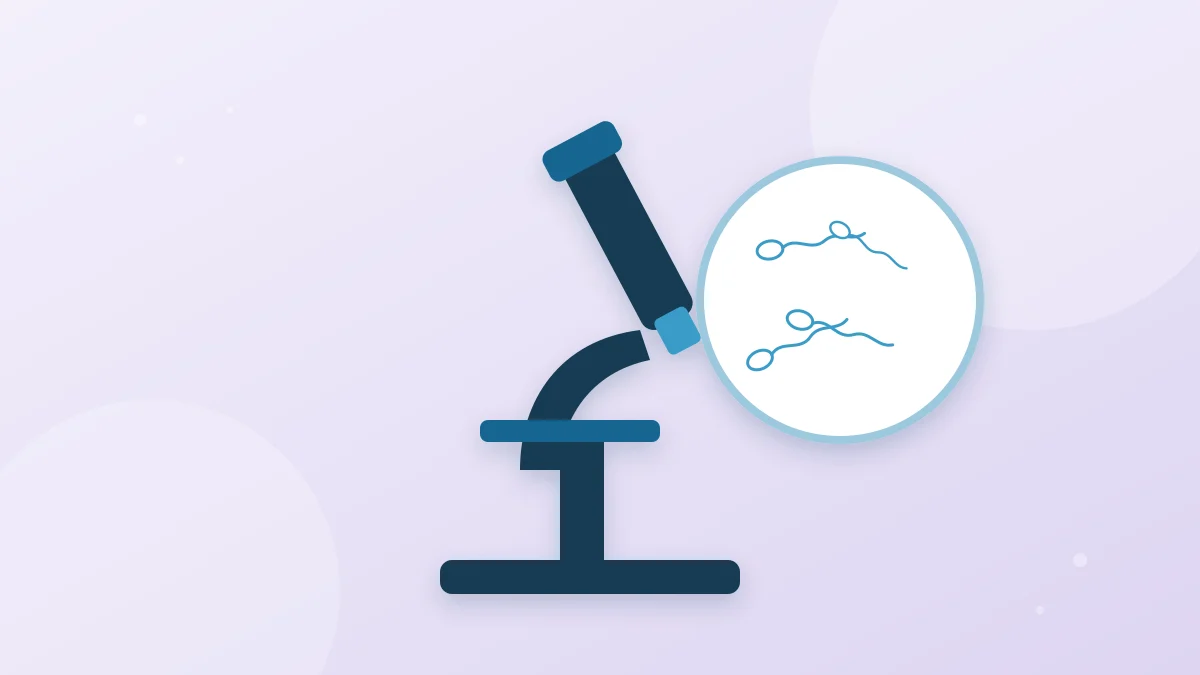
A semen analysis is the first test in assessing male fertility. It is simple and painless, yet the results are often hard to understand: numbers, percentages and complicated words such as "oligoasthenoteratozoospermia".
Here is how to prepare for the test, how to read the main values and what happens if a result is abnormal.
What is a semen analysis?
A semen analysis is the microscopic examination of a semen sample. It assesses the quantity and quality of sperm, the male reproductive cells. It is requested when a couple has not conceived after 12 months of regular unprotected intercourse, or after 6 months if the woman is over 35.
A male factor is found in about half of couples who struggle to conceive, so it is important for the man to have this test from the start, at the same time as his partner.
How should you prepare for the test?
The sample is usually collected at the laboratory, in a private room, by masturbation into a sterile container.
How do you read semen analysis results?
The table below shows the main reference values from the World Health Organization (WHO, 2021). They correspond to the lowest values found in men who became fathers within a year.
| Parameter | Reference value (WHO 2021) | What it measures |
|---|---|---|
| Volume | 1.4 ml or more | Amount of semen |
| pH | 7.2 or more | Acidity of semen |
| Concentration | 16 million/ml or more | Number of sperm per millilitre |
| Total number | 39 million or more | Number of sperm in the ejaculate |
| Progressive motility | 30% or more | Sperm swimming forward |
| Total motility | 42% or more | Sperm moving, even on the spot |
| Vitality | 54% or more | Live sperm |
| Normal forms | 4% or more | Sperm with a typical shape |
What do the words in the report mean?
| Term | Meaning |
|---|---|
| Normozoospermia | All main parameters are within the reference values |
| Hypospermia | Low semen volume |
| Oligozoospermia | Low sperm count |
| Asthenozoospermia | Insufficient sperm movement |
| Teratozoospermia | Low proportion of normal forms |
| Necrozoospermia | Low proportion of live sperm |
| Azoospermia | No sperm at all in the ejaculate |
| Leukocytospermia | Many white blood cells, which may suggest an infection |
These terms can be combined: "oligoasthenoteratozoospermia" (OAT) means that count, movement and shape are all below the reference values.
What should you do if the result is abnormal?
If the abnormality is confirmed, the urologist-andrologist looks for a cause. The work-up may include:
- a clinical examination of the testicles, looking in particular for a varicocele (enlarged veins in the scrotum);
- a scrotal ultrasound;
- hormone tests (FSH, LH, testosterone);
- a semen culture if an infection is suspected;
- a sperm preparation test, which assesses the sperm usable for assisted reproduction;
- genetic testing for severe abnormalities or azoospermia.
Can sperm quality be improved?
Often, yes, at least in part. Some everyday factors have a real effect on semen, visible after about three months.
Depending on the cause, treatment may be offered: treating an infection or hormone problem, or varicocele repair when indicated. If natural conception remains difficult, the andrologist refers the couple for assisted reproduction (IUI, IVF, ICSI), together with the gynaecologist.
Does azoospermia mean you can't have children?
Not necessarily. Azoospermia can be caused by a blockage in the ducts that carry sperm, while the testicles produce it normally, or by a production problem. In many cases, sperm can be retrieved directly from the testicle with a minor procedure and then used for ICSI. A full andrology work-up is essential to know the options.
Difficulty conceiving is one of the 7 signs that should prompt a visit to a urologist. If you also have sexual difficulties, read our article on erection problems.
Getting your semen analysis interpreted in Agadir
Dr. Abdellatif Mitach, urologist and andrologist, sees men and couples at his practice on Avenue Hassan II in Agadir to interpret semen analyses and organise the male fertility work-up. See the male infertility page or book an appointment online, and bring your results.
Sources
- World Health Organization (WHO), Laboratory manual for the examination and processing of human semen, 6th edition (2021): who.int
- French Association of Urology (AFU), patient information: urofrance.org
- European Association of Urology (EAU), Patient Information: patients.uroweb.org
Need a consultation?
Book online in seconds. Our team will call you to confirm your time slot.
Book an appointmentThe information on this website is for general information only and does not replace a medical consultation.
Read next
 Conseils
Phimosis and circumcision: what you need to know
A foreskin that won't pull back, infections, discomfort during sex… Normal versus pathological phimosis, treatment with cream or surgery, paraphimosis, and circumcision under proper medical conditions.
 Conseils
Blood in the urine (haematuria): causes, emergencies and tests
Red or pink urine, even once: blood in the urine must always be investigated. Possible causes, emergency signs and what the work-up involves (ultrasound, CT urogram, cystoscopy).
 Conseils
Varicocele: symptoms, fertility and treatment
A heavy feeling in the scrotum, swollen veins, an abnormal semen analysis… Varicoceles are common and often harmless. How to recognise one, when it should be treated and which techniques exist.