Skip to content
Dr. Abdellatif MitachUrologist & Andrologist in Agadir

Prostate diseases

Benign prostatic hyperplasia, prostatitis and prostate cancer screening: diagnosis and tailored treatment.

Prostate diseases
The prostate: where is it and what does it do?

The prostate: where is it and what does it do?

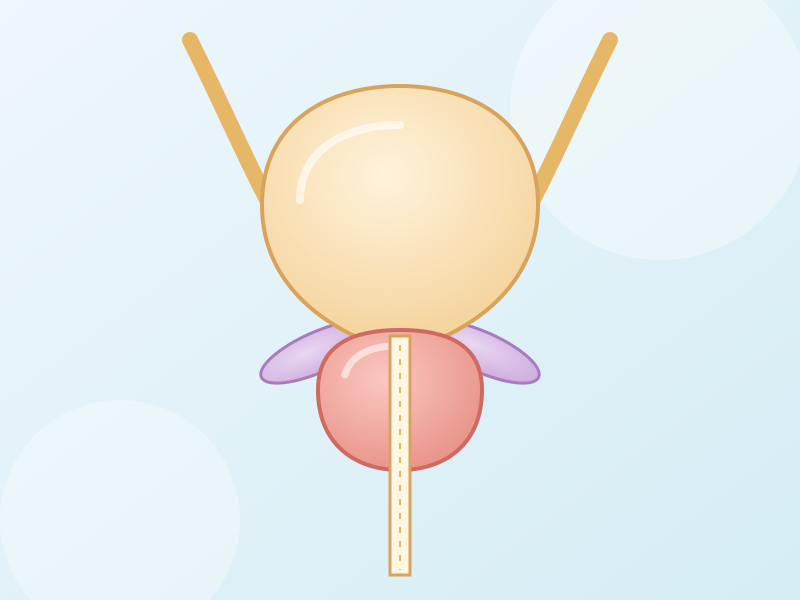
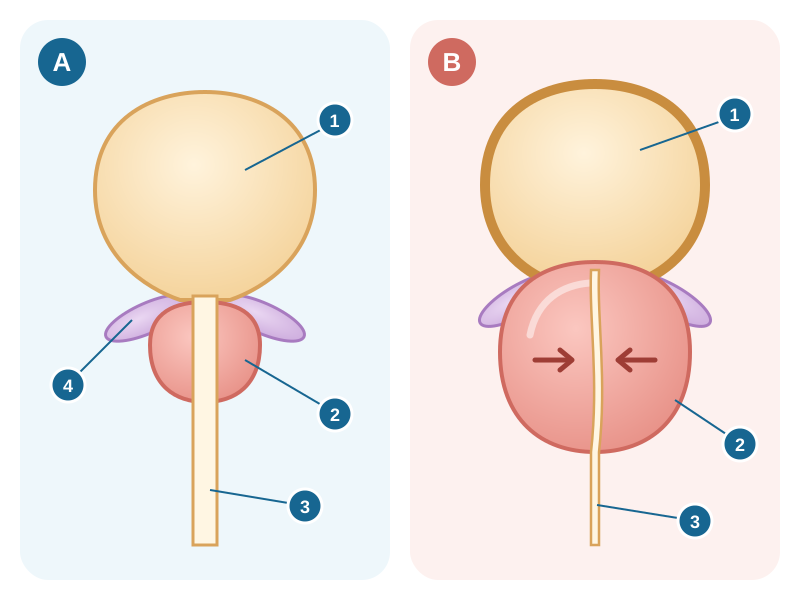
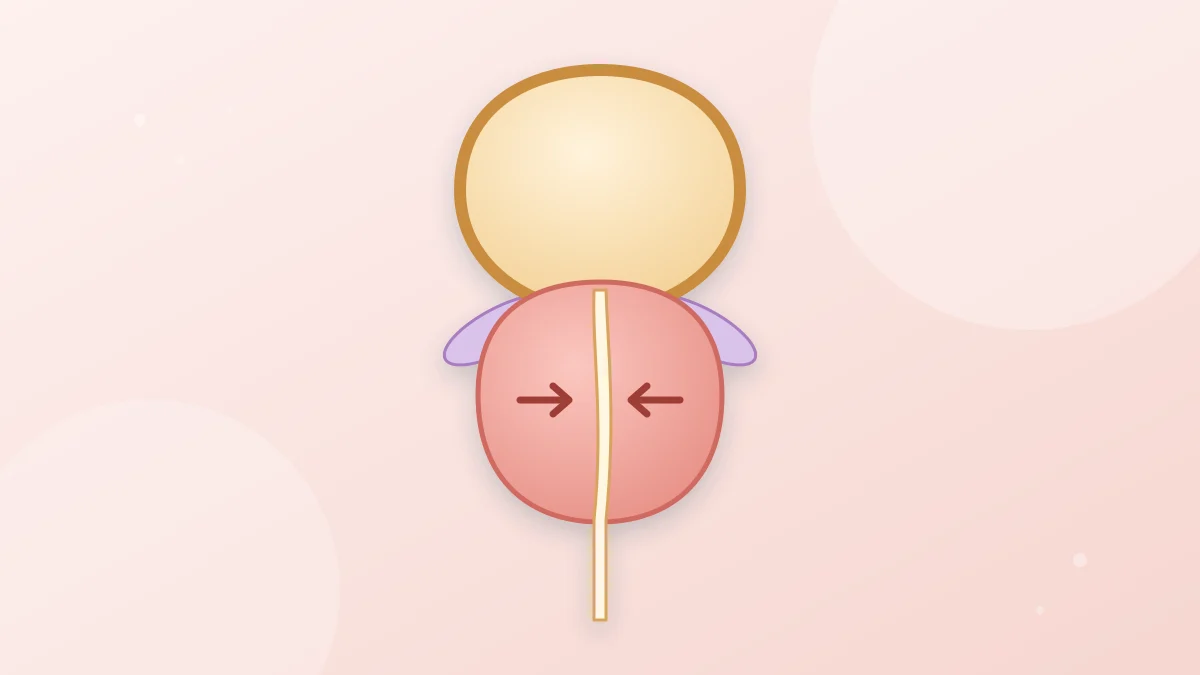
The prostate is a male gland the size of a chestnut, located below the bladder and in front of the rectum. It surrounds the first part of the urethra, the tube that carries urine out of the bladder.

It makes part of the seminal fluid, which nourishes and carries sperm. With age it often grows (benign enlargement) and can squeeze the urethra: this explains a weak stream and frequent urges.

In the diagram: A normal prostate · B enlarged prostate narrowing the urethra

1 Bladder · 2 Prostate · 3 Urethra · 4 Seminal vesicles

What are the symptoms of a prostate problem?

Frequent urination, especially at night, a weak stream, difficulty starting or a feeling of incomplete emptying are the most common signs and should prompt a consultation.

Benign prostatic hyperplasia

Very common after 50, it is not cancer. Treatment depends on how bothersome symptoms are: monitoring, medication or, when needed, surgery.

Should I be screened for prostate cancer?

Screening is based on a clinical exam and a PSA blood test. It is discussed with the urologist, usually from age 50, or earlier with a family history.
When should you see a doctor?

These signs should prompt a visit to a urologist:

  • Frequent urination, especially at night
  • Weak or interrupted urine stream
  • Difficulty starting to urinate
  • Feeling that the bladder is not completely empty
  • Burning when urinating, fever or lower abdominal pain
  • Blood in the urine or semen

How is it diagnosed?

  1. Medical history

    Your symptoms, how they affect daily life and your family history.

  2. Clinical examination

    It includes a digital rectal exam, a quick and only mildly uncomfortable check of the prostate.

  3. Lab tests

    PSA blood test and, if needed, a urine culture.

  4. Imaging

    Ultrasound of the prostate and bladder with post-void residual measurement; MRI when needed.

Treatment options

Treatment is chosen together with you, based on the cause, how severe the symptoms are and what matters to you.

  • Monitoring & lifestyle

    When symptoms are mild, a few simple measures and regular follow-up are often enough.

  • Medication

    Medicines can ease urine flow or reduce the size of the prostate.

  • Surgery

    If medication is no longer enough or complications occur, a procedure, often endoscopic, is discussed.

  • Screening & follow-up

    Clinical exam and PSA, to discuss from age 50, or earlier with a family history.
Everyday advice

  • Drink less in the 2 hours before bedtime
  • Limit coffee, strong tea and alcohol
  • Don't hold urine for too long
  • Stay physically active

Articles to learn more

Conseils

Benign prostatic hyperplasia (BPH): symptoms and treatment

Getting up at night, a weak stream, incomplete emptying… An enlarged prostate is very common after 50. Symptoms, complications, tests and treatments: medication, laser or surgery through the natural passages.

Conseils

High PSA: what next? Understanding the PSA test

A PSA above normal does not mean cancer. What PSA measures, what can raise it and the next steps: repeat test, consultation, MRI and biopsy if needed.

See all articles

Need a urological opinion?

Book online or message us on WhatsApp.

The information on this website is for general information only and does not replace a medical consultation.

Call WhatsApp