Erection problems: causes, check-up and treatment
Dr. Abdellatif Mitach · 5 min read · Published on
Erection problems are common and treatable in most cases. Physical and psychological causes, the link with heart health, what happens at the consultation and the treatments available.
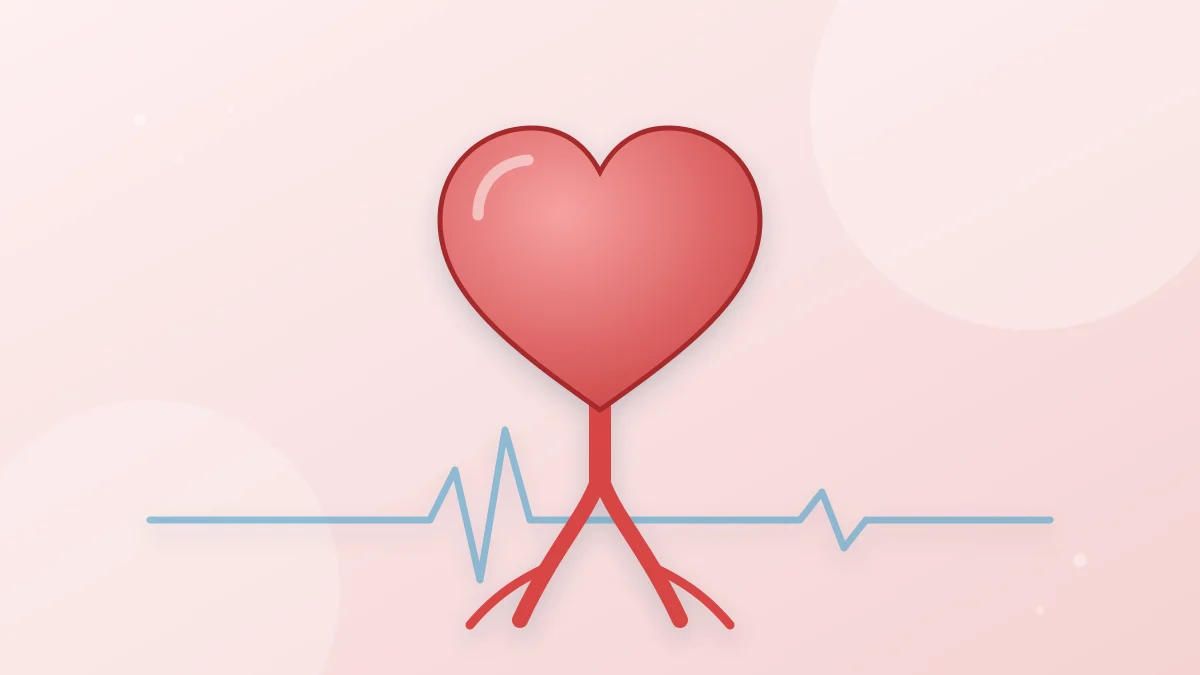
Erection problems are common, yet many men don't dare talk about them, even with their doctor. Some wait for years, withdraw, or buy pills without a prescription.
That's a shame: in most cases, an effective solution exists. Seeing a doctor also makes sure no underlying disease — particularly heart disease — is behind the problem.
What is erectile dysfunction?
Erectile dysfunction, or impotence, is the persistent inability to get or keep an erection firm enough for satisfying sex. An occasional "failure" linked to tiredness, stress or alcohol is normal and is not part of this diagnosis.
These problems affect, to varying degrees, a large share of men over 40, and become more common with age. They can also affect younger men, often with an element of stress or anxiety.
An erection is a complex process involving desire, nerves, hormones and, above all, blood flowing into the penis. A problem at any of these levels can be enough to disrupt it.
What causes erection problems?
| Type of cause | Examples |
|---|---|
| Vascular | Diabetes, high blood pressure, cholesterol, smoking, excess weight, inactivity |
| Hormonal | Low testosterone, thyroid disorders |
| Neurological | Long-standing diabetes, neurological diseases, spinal cord injury |
| Medicines | Some blood pressure medicines, antidepressants, hormone treatments |
| Surgery or radiotherapy | Procedures on the prostate, bladder or pelvis |
| Psychological | Stress, performance anxiety, depression, relationship difficulties |
In many men, several causes add up: a physical problem often triggers anxiety, which in turn makes it worse.
Why should you talk to a doctor about it?
The arteries of the penis are narrower than those of the heart. When they start to narrow, erection problems can appear several years before other signs of heart disease, such as a heart attack.
What happens at the consultation?
The consultation is confidential and non-judgemental. The urologist-andrologist asks about the history of the problem, your health, your medication and your relationship. A short questionnaire (IIEF-5 score) sometimes helps measure the problem.
The work-up usually includes:
- a clinical examination, including blood pressure and a genital examination;
- a blood test: blood sugar, cholesterol and, if needed, testosterone, preferably in the morning;
- more rarely, a Doppler ultrasound of the penis to study blood flow.
What are the treatments?
Treatment is chosen together with you, based on the cause, your expectations and your health.
| Treatment | How it works | Good to know |
|---|---|---|
| Lifestyle | Stopping smoking, exercise, weight loss, diabetes control | Improves erections and protects the heart |
| Tablets (PDE5 inhibitors) | Help blood flow into the penis | Only work with sexual stimulation; not to be taken with nitrates |
| Injections into the penis | The medicine directly triggers an erection | Very effective when tablets are not enough; the injection is taught during the visit |
| Hormone treatment | Corrects a confirmed low testosterone | Only if a deficiency is proven by blood tests |
| Sex therapy and counselling | Works on anxiety, stress and the relationship | Useful alone or with other treatments |
| Penile implant | Device placed in the penis during surgery | Offered when other treatments have failed |
Tablets are the most widely used treatment. They are taken before sex, with a timing your doctor will explain, and do not cause an erection without desire. Their effect is judged after several attempts.
Can erection problems be treated?
Yes, in the vast majority of cases. When the cause is reversible (stress, smoking, a medicine, low testosterone), the problem can disappear completely. In other cases, treatment makes a satisfying sex life possible again. The earlier you seek help, the easier it is to stop anxiety from setting in.
Erection problems are also one of the 7 signs that should prompt a visit to a urologist. If you are trying for a baby, see our page on male infertility too.
Erection problems: seeing a specialist in Agadir
Dr. Abdellatif Mitach, urologist and andrologist, sees patients in complete confidence at his practice on Avenue Hassan II in Agadir. See the erectile dysfunction and sexual health page or book an appointment online.
Sources
- French Association of Urology (AFU), patient information: urofrance.org
- European Association of Urology (EAU), Patient Information: patients.uroweb.org
- French National Authority for Health (HAS): has-sante.fr
Need a consultation?
Book online in seconds. Our team will call you to confirm your time slot.
Book an appointmentThe information on this website is for general information only and does not replace a medical consultation.
Read next
 Conseils
Phimosis and circumcision: what you need to know
A foreskin that won't pull back, infections, discomfort during sex… Normal versus pathological phimosis, treatment with cream or surgery, paraphimosis, and circumcision under proper medical conditions.
 Conseils
Blood in the urine (haematuria): causes, emergencies and tests
Red or pink urine, even once: blood in the urine must always be investigated. Possible causes, emergency signs and what the work-up involves (ultrasound, CT urogram, cystoscopy).
 Conseils
Varicocele: symptoms, fertility and treatment
A heavy feeling in the scrotum, swollen veins, an abnormal semen analysis… Varicoceles are common and often harmless. How to recognise one, when it should be treated and which techniques exist.