Varicocele: symptoms, fertility and treatment
Dr. Abdellatif Mitach · 5 min read · Published on
A heavy feeling in the scrotum, swollen veins, an abnormal semen analysis… Varicoceles are common and often harmless. How to recognise one, when it should be treated and which techniques exist.
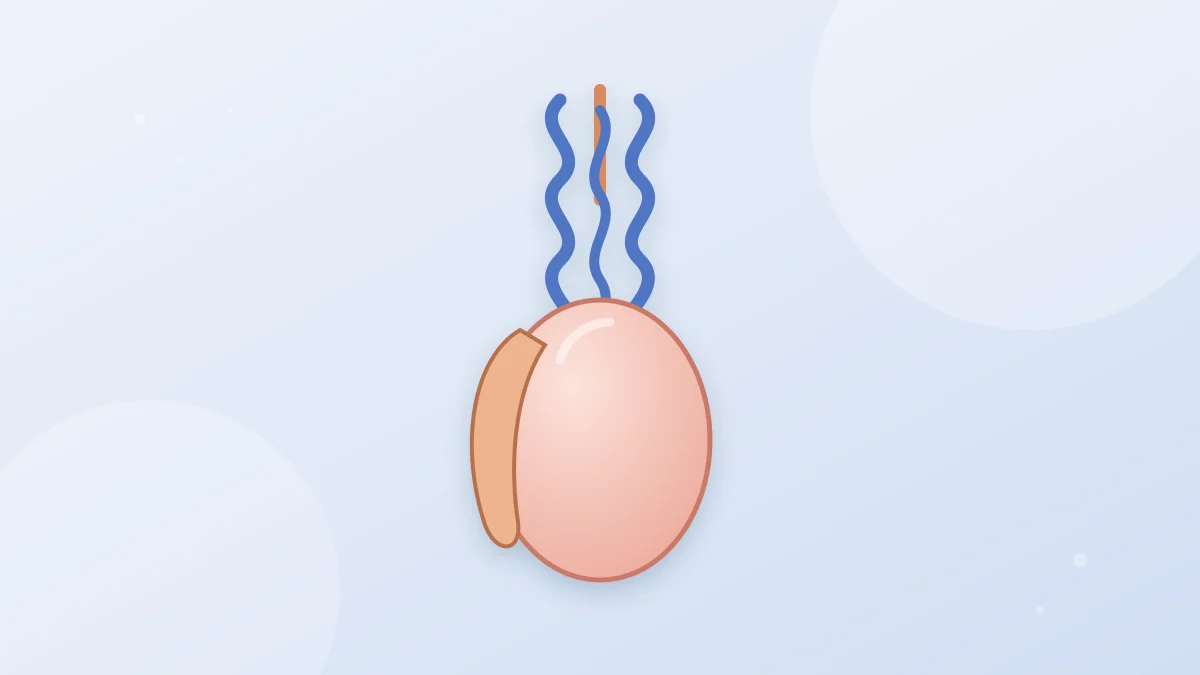
A varicocele is a very common condition in men, often found by chance during an examination or a fertility work-up. It sometimes causes no symptoms at all, but it can be responsible for testicular discomfort or lower sperm quality.
Does it need surgery? Not always. Here is how to recognise it, when it deserves treatment and what the options are.
What is a varicocele?
Each testicle is drained by a network of small veins running up along the spermatic cord. When the valves in these veins don't work properly, blood flows backwards and the veins swell: this is a varicocele, similar to varicose veins in the legs.
It is usually on the left side because of anatomy: the left testicular vein joins the kidney vein at a right angle, which encourages backflow. It generally appears during adolescence.
Varicoceles affect around 15% of men, and are found much more often in men who seek help for difficulty conceiving.
What are the symptoms of a varicocele?
Many varicoceles cause no symptoms. When they do, they may cause:
- a heavy feeling or dull ache in the scrotum;
- discomfort that gets worse when standing, in the heat, after exercise or at the end of the day, and eases when lying down;
- veins you can see or feel above the testicle, sometimes described as a "bag of worms";
- sometimes, a testicle that is smaller than the other.
| Grade | What the examination shows |
|---|---|
| Subclinical | Visible only on ultrasound |
| Grade 1 | Can be felt only when bearing down (Valsalva manoeuvre) |
| Grade 2 | Can be felt when standing, without effort |
| Grade 3 | Visible through the skin |
How does a varicocele affect fertility?
Blood pooling in the swollen veins warms the testicle, while sperm production needs a temperature slightly below body temperature. A varicocele can therefore reduce sperm count, motility or shape.
But not every varicocele affects fertility: many men with one become fathers without any treatment. The semen analysis shows whether there is an effect. To understand the results, read our article semen analysis: how to read the results.
How is it diagnosed?
Diagnosis relies above all on a clinical examination, done standing, at rest and then while bearing down. The urologist also compares the size of both testicles.
A scrotal Doppler ultrasound confirms the varicocele, measures the veins and the backflow, and checks the testicles. If you are trying for a baby, a semen analysis completes the work-up, sometimes with hormone tests.
Does a varicocele need surgery?
Treatment is discussed, however, in the following situations:
- an infertile couple, a palpable varicocele and an abnormal semen analysis, when the partner's work-up shows no major obstacle;
- pain or heaviness that affects daily life despite simple measures;
- in teenagers, when the testicle on the varicocele side grows less well than the other.
Varicoceles seen only on ultrasound are usually not treated.
What are the treatments?
The aim is to block the faulty veins so blood flows through other, healthy veins.
| Technique | How it works | Good to know |
|---|---|---|
| Microsurgery | The veins are tied through a small incision in the groin, under a microscope | Low risk of recurrence and hydrocele; quick return to activities |
| Laparoscopic surgery | The veins are tied through small incisions in the abdomen | Under general anaesthesia |
| Embolisation | A radiologist blocks the veins from the inside with a catheter inserted into a vein | No surgical incision; done in interventional radiology |
Recovery is quick, within a few days. For infertility, any improvement in semen is checked with a repeat semen analysis three to six months after treatment, the time needed to produce new sperm.
Can a varicocele come back after treatment?
It can, but it is rare with current techniques, especially microsurgery. Recurrence or persistence is checked with an examination and a follow-up ultrasound. It can be treated again, with surgery or embolisation.
Difficulty conceiving is one of the 7 signs that should prompt a visit to a urologist.
Varicocele care in Agadir
Dr. Abdellatif Mitach, urologist and andrologist, sees patients at his practice on Avenue Hassan II in Agadir to examine varicoceles, interpret semen analyses and discuss whether treatment is worthwhile. See the male infertility page or book an appointment online.
Sources
- French Association of Urology (AFU), patient information: urofrance.org
- European Association of Urology (EAU), Patient Information: patients.uroweb.org
- French National Authority for Health (HAS): has-sante.fr
Need a consultation?
Book online in seconds. Our team will call you to confirm your time slot.
Book an appointmentThe information on this website is for general information only and does not replace a medical consultation.
Read next
 Conseils
Phimosis and circumcision: what you need to know
A foreskin that won't pull back, infections, discomfort during sex… Normal versus pathological phimosis, treatment with cream or surgery, paraphimosis, and circumcision under proper medical conditions.
 Conseils
Blood in the urine (haematuria): causes, emergencies and tests
Red or pink urine, even once: blood in the urine must always be investigated. Possible causes, emergency signs and what the work-up involves (ultrasound, CT urogram, cystoscopy).
 Conseils
Semen analysis: how to read the results
Volume, concentration, motility, normal forms… How to prepare for a semen analysis, how to read the WHO reference values, what oligo-, astheno- or teratozoospermia mean, and what to do if a result is abnormal.